Flight Simulators of Yesteryear
We’ve all seen pictures of simulators that are in use today; modern, highly sophisticated machines that make you feel as if you were actually flying.
They are useful training aids and help pilots polish their flying skills and procedures in many areas such as flying instrument approaches, dealing with emergencies and abnormal situations, familarization with new aircraft, and flight crew coordination …. all from the safety of being on the ground. They are amazing machines and have been developed considerably since the beginning when men and women started flying. Even the modern desktop and laptop computer flight simulators are far ahead of what was used in the past for ground based flight training.
Have you ever wondered what some of the early simulators were like? I have and found some interesting simulators from yesteryear.
In this photo we see the earliest of ground simulators ( photo circa 1911 ). A student is seated in a “Tonneau d’apprentissage”, or “Antoinette”, at the École de Pilotage [Antoinette Piloting School] at Mourmelon-le-Grande, France. Two half-sections of a barrel were moved manually which represented the pitch and roll of an airplane. The student pilot was then required to line up a reference bar with the horizon.
Although not a true synthetic simulator, this is a 1917 Breese Penguin. It was used to give student pilots the feel of aircraft controls at near flying speeds without the danger of actual flight. (The Penguin’s wings were too short and its engine too small to allow it to fly.) The “Penguin” was intended to be just as unmanageable as real aircraft, thus they had no brakes or steerable wheels - which made them quite difficult to control.
This is the 1917 “Ruggles Orientator”. It consisted of a seat mounted within a gimbal ring assembly that enabled full rotation of the student pilot in all three axes ( pitch, yaw, and roll ) and a fourth additional vertical movement. All motions were controlled by rudder bars and sticks by the instructor and student pilot which operated electric motors to produce the desired flight attitudes. The goal was to train students to recognize and recover from unusual attitudes that might be encountered in flight.
* Note the position of the student pilot in the far right simulator and the fact that there is no instructor!
The next major advancement in simulators came in 1929. The Link trainer invented by Edwin Albert Link is easily one of the most recognized early simulators. They were produced and used from 1934 through the late 1950’s. Just as the ad above says “Every aviation cadet receives instruction in a Link Trainer”….and that’s not an exaggeration because 10,000 units were produced and thousands of pilots trained in them, especially during WWII.
Known as the “Blue Box” to the student pilots, these trainers kept pace with the increased instrumentation and flight dynamics of aircraft of their period, but retained the electrical and pneumatic design fundamentals pioneered in the first 1929 Link prototype.
There are two major components to the trainer, the first is the trainer itself which is connected via universal joint to the base. Inside the cockpit is a single pilot’s seat, stick and rudder controls, and a full suite of flight instruments.
The base contains several items: a complicated sets of air-driven bellows to simulate 3 axis motion, an air compressor ( powers the motion bellows and some of the aircraft instruments), and a “Telegon Oscillator” which controls the remaining instruments.
The second major component is an external instructor’s station, which consists of a large map table, a repeated display of the main flight instruments, and a moving marker known as a “crab.”
The crab moves across the glass surface of the map table, plotting the pilot’s track. The pilot and instructor would communicate with each other via headphones and microphones.
Both the trainer and the instructor’s station are powered from standard 110VAC/240VAC power outlets via a transformer, with the bulk of internal wiring being low voltage. Simulator logic is all analog and is based around vacuum tubes.
The Link trainer is really the beginning of modern flight simulators because they all incorporate many of the innovations that were found in this trainer….3 axis motion, pilot / instructor radio communcation, flight tracking, full cockpit instrumentation, and to some extent aircraft specific duplication ( the instrument layout of the ANT18 Link is that of the AT-6 and SNJ aircraft ). All that would be needed to complete the formula is a visual element.
The first airline to own a full aircraft simulator was Pan American Airways in 1948. Curtiss-Wright developed the simulator for use in training crews flying the Boeing 377 Stratocruiser.
No motion or visual systems were installed, but in all other respects the simulator duplicated the appearance and behavior of the Stratocruiser cockpit. Instructors could introduce emergencies or abnormal situations on a fault insertion panel or “trouble box” to train flight crews procedures and coordination in order to solve in-flight problems. In addition, complete routes could be flown, as in real life, using the same navigational aids.
By 1958 it was all beginning to come together. BOAC had contracted Redifon to develop a full motion simulator for the Comet IV aircraft. The simulator was beginning to look more like what is in use today but realistic visual aspects were yet to be used. It wasn’t until 1962 when the first colour system was produced by Redifon, utilizing television technology, that simulators had believable visual references that we are familiar with today.
WWII Wooden Wonders
But first let’s take a look at the Mosquito….
| DeHavilland Mosquito DH-98 | |
![]() During the war it was thought that if an airplane were built by manufacturers outside of the aircraft industry and out of non strategic materials such as wood, not only could an untapped workforce of cabinet makers and carpenters be utilized, but production could be simplified thereby enabling a faster construction rate of aircraft so vital to the war effort. The Mosquito, also known as “The Wooden Wonder”, “The Timber Terror”, or “Mossie” is the most famous of these wooden aircraft so I thought we should take a look at how it was built, since these techniques are similar to those used in building other aircraft made of wood. |
|
1. Glue is applied to build up a “sandwich” of plywood for the outer aircraft skins. |
2. Wood veneers of birch or spruce were layered with balsa wood cores in between. This is done over a mold so that the final shape is held when cured. |
3. Pressure is applied by bands for tight bonds. |
4. Here the fuselage skin is removed from the mold. |
5. Bulkheads are prepared for the inner structure of the aircraft to be joined to the skins later. |
6. After the bulkheads have been attached to the fuselage skins, everything is glued and clamped together. |
7. The finished fuselage ready to be attached to the wings. |
8. Wing ribs are being attached to the wing spar for the internal structure “skeleton” of the wing. |
9. Finally, the wing is covered with wood veneers. |
10. The fuselage and wings meet and are joined at 4 attachment points. This is a very light yet extremely strong aircraft. |
11. The final systems are added as well as the engines and the aircraft is ready for action!
|
Total Mosquitos built……. 7,781 Max Speed……………. 415 mph Production years…….. 1940-50 |
| More WWII Wooden Aircraft Here are some other aircraft that were constructed mostly out of wood: |
ITALY- Ambrosini SAI.207
|
ITALY- Ambrosini SAI.403![]() |
ENGLAND- Avro Anson![]() |
ENGLAND- Armstrong Whitworth A.W.41 Albemarle![]() |
FRANCE- Caudron C.714![]() |
UNITED STATES- Cessna AT-17/UC-78 Bobcat![]() |
UNITED STATES- Fairchild PT-19![]() |
GERMANY- Focke Wulf TA-154![]() |
GERMANY- Heinkel He 162 Volksjäger![]() |
GERMANY- Horten HO-229![]() |
UNITED STATES- Waco CG-4A![]() |
RUSSIA- Yakovlev Yak-1![]() |
Mooney Mite M-18
|
Did you ever wish you could have your own personal “fighter”, an airplane that would fly at speeds of 120-130 m.p.h., sipped 3.5 gallons of gas per hour, and only cost $1995? Well, Al Mooney was sure that you would so he designed a cute little single place airplane called the Mooney M-18 “Mite”. It was certified and produced from 1948 to 1955 with a total of 283 Mites being built. I first saw a Mooney Mite when I was a teenager; it was hanging from the rafters in a barn that was owned by a business customer of my Father. It was one of several other airplanes being stored there and was painted yellow…. I’ll never forget it. |
| It seemed a shame that the Mite was reduced to “flying” from the rafters. I was told that Mooney Mites were originally powered by Crosley “Cobra”- COpper BRAzed automobile engines. I found that interesting because my brother just happened to own a 1952 Crosley Custom Sedan at the time! |
![]() |
As I recall, the performance of the auto was poor with the 25- h.p. liquid cooled engine so I imagine that the performance of the M-18 Mite might not be spectacular either. As a matter of fact, the performance of the Crosley engine (now called a Mooney CC46M-2, see photo on the left) was inadequate which caused Mooney to exchange the engines in the first 10 production Mites with a more reliable 65-h.p. Lycoming (0-145-B2) engine. Later models also used a Continental (A65-12, or -8) when the Lycoming engine became unavailable. The performance with the new engine increased the cruise speed from 85 m.p.h. to 120 m.p.h., rate of climb increased from barely 300 f.p.m. to 1000 f.p.m. Al Mooney was well on his way to producing a great flying airplane. It did fly well but sadly the sales were not there and production ended in 1955. |
This photo is the M-18 prototype with a Crosley engine. It also happens to be the same airplane featured in the ad at the beginning of the article. As you can see it was later converted with the aircraft engine also. |
![]() |
SPECIFICATIONS | |
| Wing Span………………………………… Length……………………………………….. Height……………………………………….. Empty Weight…………………………….. Gross Weight……………………………… Fuel (Usable)……………………………… Range (@ 125 mph)………………………. Takeoff Distance………………………….. Landing Distance………………………….. Service Ceiling…………………………….. Vs………………………………………….. Vne……………………………………….. |
26 ft 10½ in. 17 ft 7¼ in. 6 ft 2½ in. 500 Lbs. 780 Lbs. 11 Gal. 390 Miles. 698 Ft. 240 Ft. 19,400 Ft. 45 MPH. 138 MPH. |
|
Do You Know Your Corsairs?
The prototype XF4U-1 made its maiden flight on May 29, 1940 and it was the first U.S. fighter to exceed 400 mph. This was achieved on October 1, 1940 with an official speed of 405 mph. The Corsair had one of the longest production runs of any piston fighter as well. |
![]() |
| VARIANTS OF THE F4U CORSAIR |
| The Corsair models all shared the basic frame as the prototype shown in the photograph below but there were constant modifications made to improve handling and flight characteristics. I thought it would be fun to take a look at some photos of the different variants. |
This is the prototype XF4U-1 Corsair. |
F4U-1 “birdcage canopy” |
F3A1 Brewster Built “birdcage canopy” |
Tom’s model shows new canopy for the F4U-1A. |
Cowling of F4U-1A. |
This is a cowling of a Goodyear built FG-1. |
The Corsair was built by three different companies: Chance Vought- F4U designation. 8,148 total. Brewster- F3A designation. 735 total. Goodyear- FG designation. 3,830 total. |
The F4U-4. Note the chin scoop and now a 4 bladed propeller.The Goodyear designator is FG-4. Both were armed with 4- 20mm canons. |
The 1945 variant F4U-5. The chin scoop is gone and there are 2 cowl “cheeks”. |
This is the AU-1 also know as the F4U-6. |
The F4U-7. Developed for the French Aeronavale. |
This is the only V-354. A tandem trainer that was never put into production. |
| VOUGHT PRODUCTION: | ||||
|
Built
|
Variant
|
Description | ||
|
2,698
|
XF4U-1
|
Initial prototype. | ||
|
688
|
F4U-1
|
“Birdcage” Initial production model. | ||
|
2,126
|
F4U-1A
|
F4U-1 with improved canopy, other changes. | ||
|
?
|
F4U-1B
|
Designation used to identify F4U-1s modified for FAA use. | ||
|
200
|
F4U-1C
|
F4U-1A with quad 20 millimeter cannon. | ||
|
1,685
|
F4U-1D
|
Fighter-bomber variant. | ||
|
?
|
F4U-1P
|
Rare Reconnaissance model. | ||
|
?
|
XF4U-2
|
Night version. | ||
|
?
|
F4U-2
|
32 (12?) night-fighter conversions of F4U-1. | ||
|
?
|
F4U-3
|
Turbocharged Double Wasp, 3 conversions. | ||
|
?
|
XF4U-4
|
New engine and cowling. | ||
|
2,058
|
F4U-4
|
Four bladed prop, other improvements. | ||
|
297
|
F4U-4B
|
F4U-4 with quad cannon. Originally intended for British use. | ||
|
?
|
F4U-4C
|
Armed with 4 20mm cannons. | ||
|
?
|
F4U-4E
|
4N F4U-4 night fighter. | ||
|
?
|
F4U-4K
|
Drone. | ||
|
9
|
F4U-4P
|
Rare reconnaissance version of F4U-4. | ||
|
?
|
XF4U-5P
|
New engine and cowling. | ||
|
223
|
F4U-5
|
1945 introduction. Four cannon, uprated engine, etc. | ||
|
214
|
F4U-5N
|
Radar F4U-5 night fighter. | ||
|
101
|
F4U-5NL
|
Boots on leading edges. Winterized F4U-5 night fighter. | ||
|
30
|
F4U-5P
|
Reconnaissance. | ||
|
111
|
AU-1
|
F4U-6 for Marines. USMC armored close-support “mudfighter”. | ||
|
97
|
F4U-7
|
French Aeronavale Corsair production. | ||
|
1
|
V-354
|
Tandem trainer. | ||
| GOODYEAR PRODUCTION: | ||||
|
Built
|
Variant
|
Description
|
||
|
?
|
FG-1
|
Goodyear land model no folding wings. | ||
|
?
|
FG-1A
|
Goodyear-built F4U-1A. | ||
|
1,997
|
FG-1D
|
Goodyear-built F4U-1D. | ||
|
12
|
FG-4
|
Goodyear-built F4U-4. | ||
|
?
|
XF2G
|
Prototypes (conversions of FG-1) for F2G. | ||
|
?
|
FG2-1
|
Land-based Corsair with Wasp Major. | ||
|
?
|
FG2-2
|
Carrier-based Corsair with Wasp Major, 4 cannon. | ||
|
?
|
FG-1E
|
Goodyear with radar. | ||
|
?
|
FG-1K
|
Goodyear drone. | ||
|
?
|
FG-3
|
Turbosupercharged. | ||
|
5
|
F2G-1
|
P&W 4360 Super Corsair. | ||
|
5
|
F2G-2
|
P&W 4360 Super Corsair. | ||
|
BREWSTER PRODUCTION:
|
||||
|
Built
|
Variant
|
Description
|
||
|
305
|
F3A-1
|
Brewster-built F4U-1. | ||
|
430
|
F3A-1D
|
Brewster F4U-1D. | ||
| TOTAL CORSAIRS PRODUCED: 12,713 |
||||
Great Fun at Sebring, Florida LSA Event
We had a great time at the Light Sport Aircraft event in Sebring, Florida this past week and talked with a lot of folks. They were all interesting and reminded us of why we love flying so much!
Many thanks goes out to all who stopped by our booth and chatted with us.
Just for fun I thought I would add a picture of a Bell 47 that Bob Viscio of New Hampshire shared with us, what a great looking helicopter.
Interestingly enough my first introduction to aviation was in a Bell 47 at our local county fair.
I took this picture of the Titan P51 early in the morning before the show got under way. They flew later that day and from a distance it looked like the real P51!
Be sure to check back soon, other photos are being sent in from folks we talked to as well….
Don’t Forget to Update Your Licenses
Certificates issued under 14 CFR Part 61 and 65 will expire March 31, 2013.
FAR 61.19(h) reads:
Duration of pilot certificates. Except for a temporary certificate issued under §61.17 or a student pilot certificate issued under paragraph (b) of this section, the holder of a paper pilot certificate issued under this part may not exercise the privileges of that certificate after March 31, 2010.
Click here to go to the FAA site to update your paper license.
Click here to go to the FAA site to change your certificate number.
LSA (Light Sport Airplane) Event
Do you recognize the airport in the photo? Well, if you said Sebring, Florida (KSEF) you would be right!
While there isn’t much happening in this photo starting January 21st to 24th there will be a “beehive” of activity here because the 2010 Light Sport Airplane event will be going on.
Gates open at 8 am. and exhibits open at 9 am. For more information go to the official website and check it out!
We will be there too so stop by the Aerotoons booth and say hello.
Cherokee Series 50th- Golden Anniversary!
The Cherokee series certified in 1960 has reached its 50th year anniversary. The dependable Cherokee PA 28 series is still in production and it has been said that over 30,000 units were built.The Cherokee 140 pictured here is of our own 1969 model. A mass migration is planned this year at the 2010 EAA AirVenture airshow so anyone interested should check the EAA site for more details. |
We like the Cherokee so well that we even designed a T-shirt “Island Hoppers” featuring it.If you would like to see the Island Hopper shirt and some of our other aviation t-shirts click here to visit our online store… |
F4U CORSAIR
Stay tuned for more about Corsairs, meanwhile take a look at this photo of an F4U-1A Corsair model that a viewer built…… nice job Tom!
Pearl Harbor Day- USS Arizona
I know that we usually focus on airplanes with this blog but I thought since aviation played a huge roll on the attack of Pearl Harbor on December 7th, 1941 that I would stop and pay tribute to the gallant Americans that lost their lives that day.
![]() ![]() |
| We are so used to seeing the famous footage of Dr. Eric Haakensen aboard the USS Solace that we seldom know what the USS Arizona looked like before December 7th so I thought it would be nice to see her in all her glory before that fateful day….. |
|
USS Arizona
|
![]() ![]() |
| Here is the USS Arizona at sea. Displacement fully loaded: 37,654 tons, maximum speed: 20.7 knots. The above photos show the bow and the port side. (Note the three Vought OS2U Kingfisher aircraft on the stern.) |
This is a view of the USS Arizona’s starboard side. |
|
USS Arizona at Pearl Harbor
|
This is a photo from a Japanese aircraft that shows the Arizona in Battleship row under attack in Pearl Harbor. |
|
USS Arizona at Pearl Harbor Today
After all these years about a quart of oil still leaks from the hull (as you you can see in the photo) and rises to the surface of the water. Survivors from the crew say that the oil will continue to leak until the last survivor dies. |


The prototype XF4U-1 made its maiden flight on May 29, 1940 and it was the first U.S. fighter to exceed 400 mph. This was achieved on October 1, 1940 with an official speed of 405 mph. The Corsair had one of the longest production runs of any piston fighter as well.
This is the prototype XF4U-1 Corsair.
F4U-1 “birdcage canopy”
F3A1 Brewster Built “birdcage canopy”
Tom’s model shows new canopy for the F4U-1A.
Cowling of F4U-1A.
This is a cowling of a Goodyear built FG-1.
The F4U-4. Note the chin scoop and now a 4 bladed propeller.
The 1945 variant F4U-5. The chin scoop is gone and there are 2 cowl “cheeks”.
This is the AU-1 also know as the F4U-6.
The F4U-7. Developed for the French Aeronavale.
This is the only V-354. A tandem trainer that was never put into production.
The Cherokee series certified in 1960 has reached its 50th year anniversary. The dependable Cherokee PA 28 series is still in production and it has been said that over 30,000 units were built.


This is USS Arizona (BB-39) as she is leaving New York City for her first “shakedown cruise” in 1916. The vessel was the first to be named “Arizona”. This was done specifically to honor the 48th state’s admission into the union, which had happened just the year before the battleship was authorized by Congress. (The Arizona was commissioned in 1916.)

The National Park Service has a great map, illustrated by Zack Anderson, that shows where the Arizona was berthed during the attack. If you take a close look you can also see the vantage point of Dr. Eric Haakensen (aboard the USS Solace) as he filmed the Arizona exploding.
This is a photo from a Japanese aircraft that shows the Arizona in Battleship row under attack in Pearl Harbor.
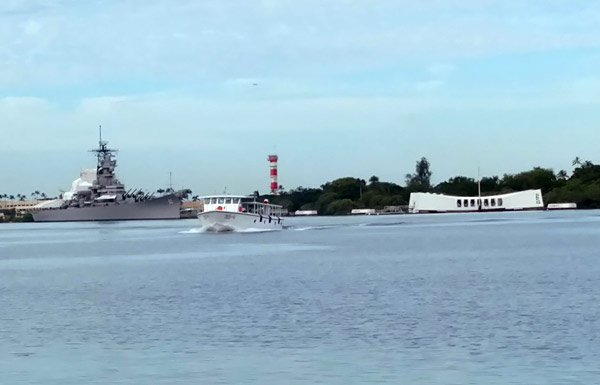
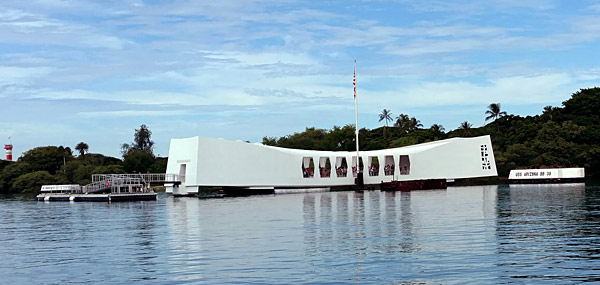
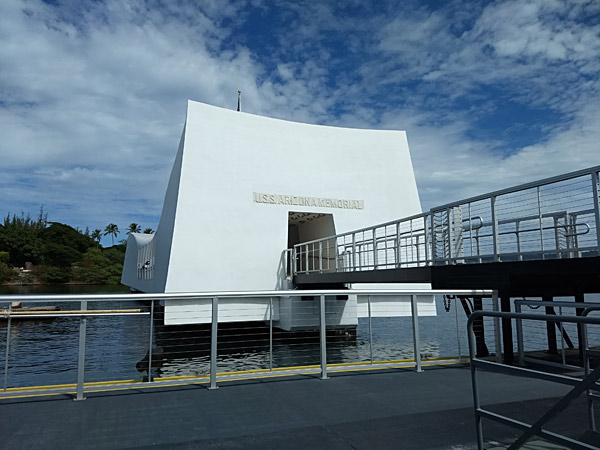
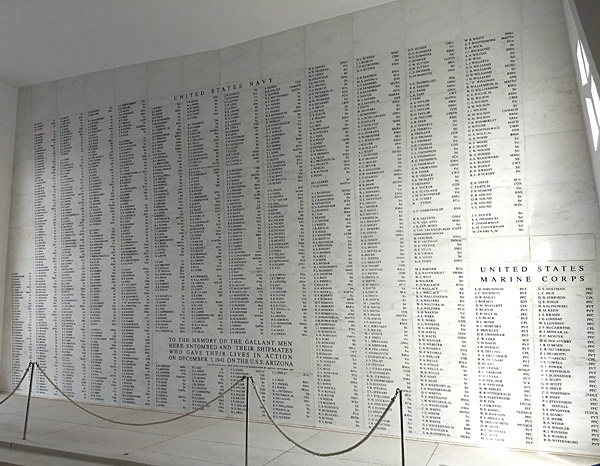
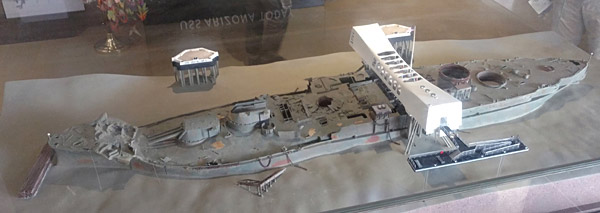
The wreck of Arizona remains at Pearl Harbor, a memorial to the 1,177 men of her crew lost that December morning in 1941. The wreck was designated as a national shrine on May 30, 1962. A memorial was built across the ship’s sunken remains, including a shrine room listing the names of the lost crewmembers on a marble wall. Warships of the Japan Maritime Self-Defense Force and other navies routinely salute Arizona when passing through Pearl Harbor.