 It's been 30+ years since I last visited O'ahu and Pearl Harbor, I wasn't married then and since my wife has never seen Pearl Harbor or O'ahu we decided to take a short trip and visit.
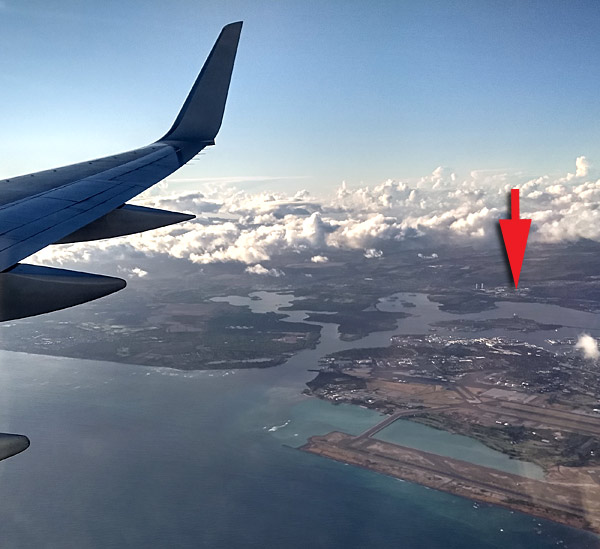
The flight was 6 hours and 35 minutes long and here we are on downwind for runway 8L at Daniel K. Inouye International Airport (PHNL) at Honolulu, Hawaii!
If you look closely, the red arrow is pointing at Pearl Harbor and Ford Island, that's going to be our first stop tomorrow!
Originally the Inouye airport was named John Rodgers Airport and was first opened in March 1927. In 1947 the airport was renamed Honolulu Airport.
|
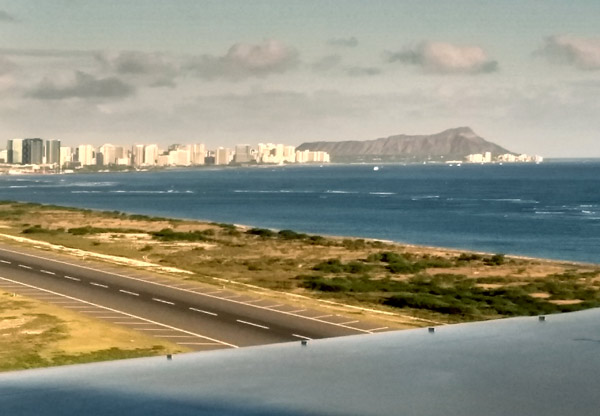 Here we are touching down and you can see Honolulu, Waikiki Beach, and Diamond Head off in the distance.
|
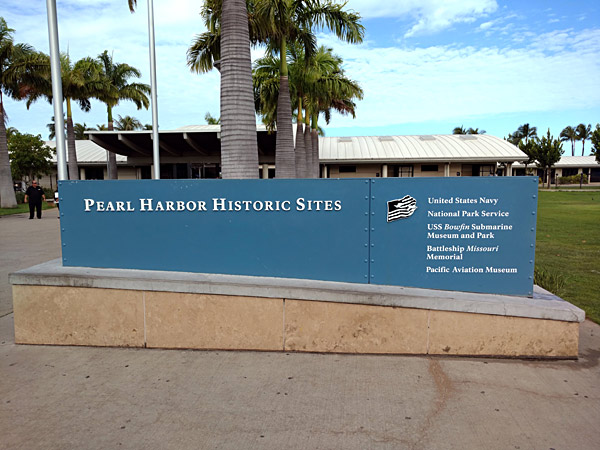 A lot has changed at the Pearl Harbor Visitor Center since I last visited the sight 33 years ago. The grounds have been renovated and there are more exhibits to discover now.
The USS Missouri (BB-63) and the USS Bowfin (SS-287) weren't here then and going over to Ford Island wasn't even an option.
*The Arizona Memorial had been closed and reopened just a few days prior to our arrival so we certainly "lucked out" and were able to visit the site without any problems.
Parking and admission to the visitor center are free.
|
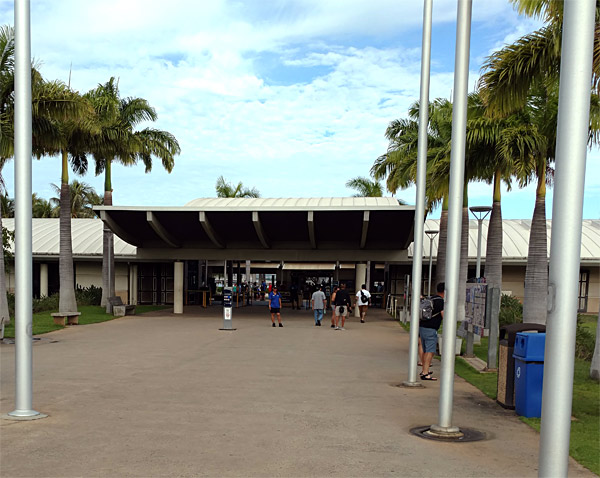 The gates open at 7:00 am and close at 4:00 pm.
Only 4500 tickets per day are given out to view the USS Arizona memorial (BB-39) so it's best to get to the sight early.
They don't allow any bags to go into the park so you have to stow them in on-sight lockers for a $5 fee.
|
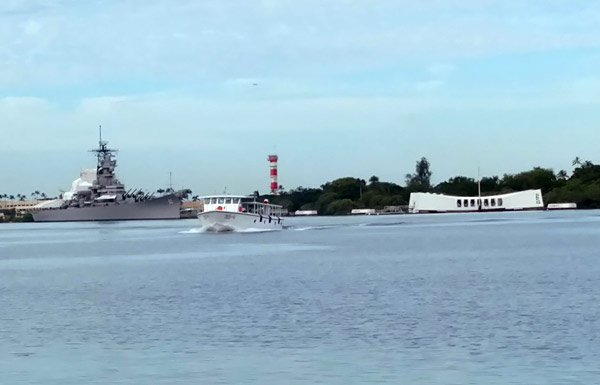 After a short 23 minute documentary movie that describes the events of December 7, 1941 everyone boards a shuttle boat operated by the U.S. Navy to go over to the memorial.
|
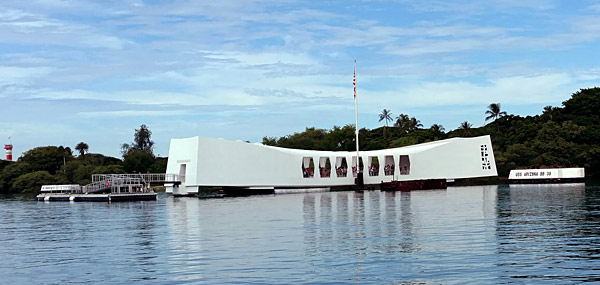 The memorial building is 184 feet long and can accomodate 200 visitors.
It was designed by Honolulu architect Alfred Pries.
The USS Arizona national memorial was formally dedicated on May 30, 1962.
|
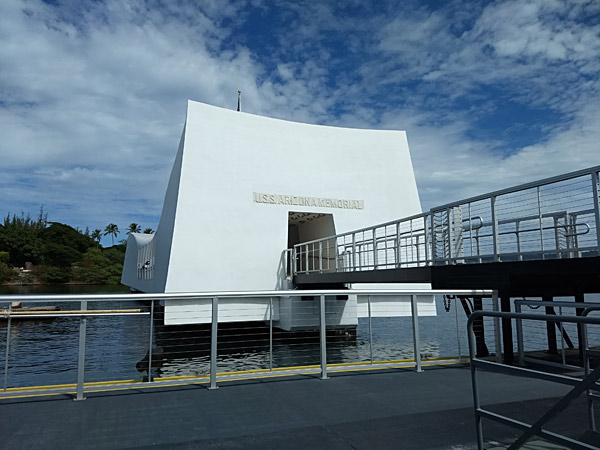 Once docked, the visitors are free to enter the memorial to look around.
There are three sections to the memorial, entry, assembly room, and shrine.
|
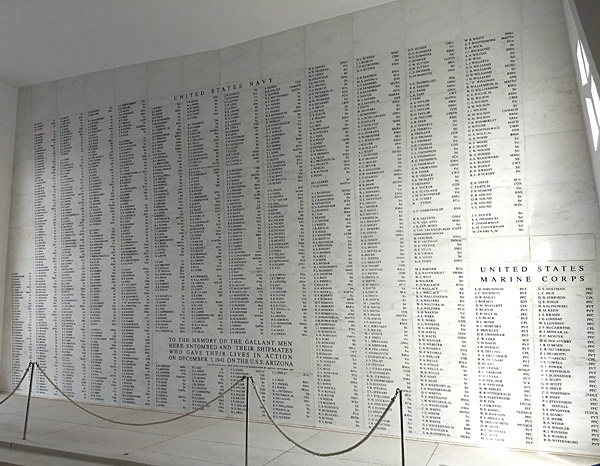 1,177 sailors and marines died on the USS Arizona (BB-39).
|
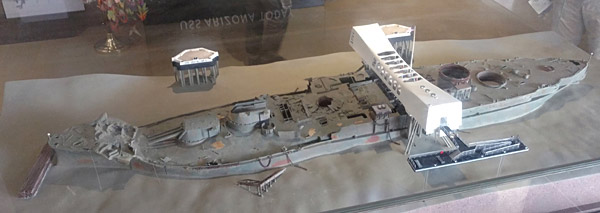 There is a great model in the visitors center that shows what is below the surface of the water at the memorial sight.
It is kind of hard to see a lot of detail when you stand on the memorial but one thing you can definitely see is the drops of oil that float to the surface from the wreck.
|
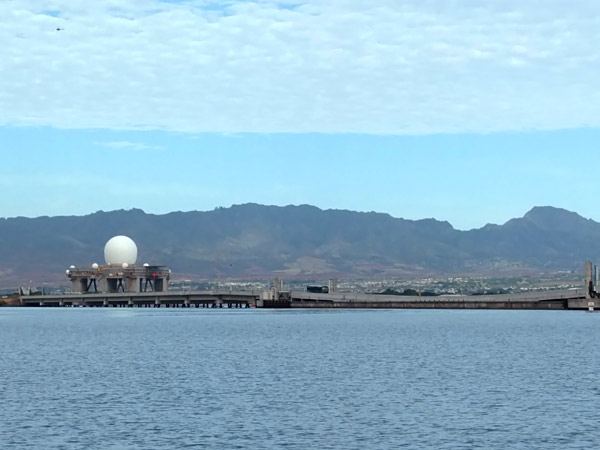 This is the Admiral Clarey Bridge. (This bridge wasn't here when I last visited Pearl Harbor.)
It is a pontoon bridge, providing access to Ford Island.
The bridge was opened April 15, 1998. Before the bridge was built, the only way to gain access to Ford Island was via ferry boats.
The bridge was named after one of the U.S. Navy's most decorated admirals Bernard "Chick" Clarey. He was a submarine commander during WWII.
Ford Island is still used by the U.S. Navy.
In order to get to the USS Missouri(BB-63) and the Pacific Aviation Museum you have to take a shuttle, which departs every 15 minutes, and crosses over this bridge. The shuttle departs from the USS Bowfin museum area.
|
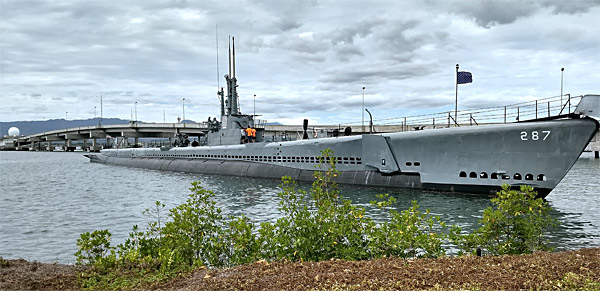 This is the USS Bowfin (SS-287).
It is a Bilao class submarine and was launched December 7, 1942. It is 311' 9" long, has a beam of 27' 3" and displaces 1,526 long tons.
|
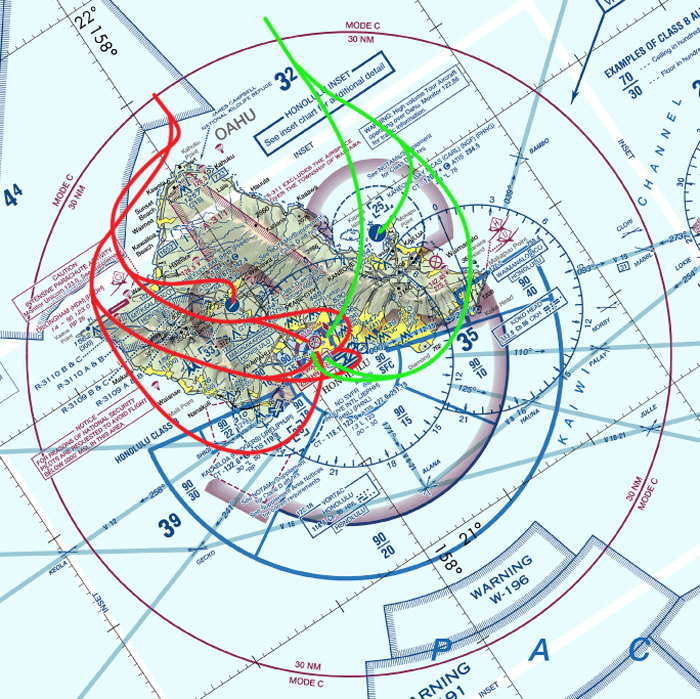 Six of Japan's first-line aircraft carriers, Akagi, Kaga, Soryu, Hiryu, Shokaku and Zuikaku, were assigned to the mission of attacking Pearl Harbor.
Launching 183 airplanes from 230 miles north of O'ahu the first wave (red route lines) arrived at 7:55 am.
The second wave (green route lines), which included 167 airplanes, arrived around 9:00 am.
The attack lasted about 90 minutes, this is the damages: 4 battleships sunk, 4 battleships damaged, 1 ex-battleship sunk, 1 harbor tug sunk, 3 cruisers damaged, 3 destroyers damaged, 3 other ships damaged, 188 aircraft destroyed, 159 aircraft damaged, 2,335 killed, and 1,143 wounded.
|
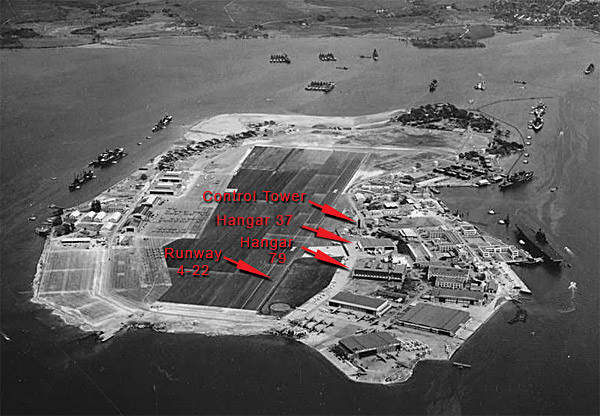 Our next destinations were on Ford Island which included the Pacific Aviation Museum and the USS Missouri (BB-63).
This is a WWII photograph of Ford Island.
The red arrows show the buildings that we will be visiting.
The control tower, which wasn't quite finished at the time of this photograph, hangar 37, which is where the Pacific Aviation Museum is, hangar 79, which is where many of the museum's aircraft are, and runway 4-22.
Ford Island has an area of 441 acres.
|
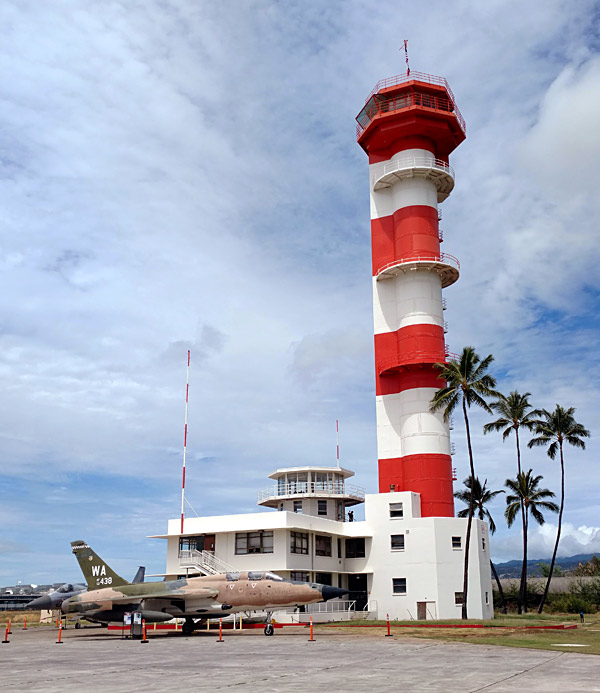 This is the 158 foot tall Ford Island control tower.
Construction of the tower began in early 1941 but at the time of the attack only 80% of construction was complete. The tower was finally completed on May 1, 1942.
The tower wasn't painted white and red at that time but was painted in a three-tone light gray, medium gray and dark gray camouflage scheme which remained so until well into the late 1950's.
|
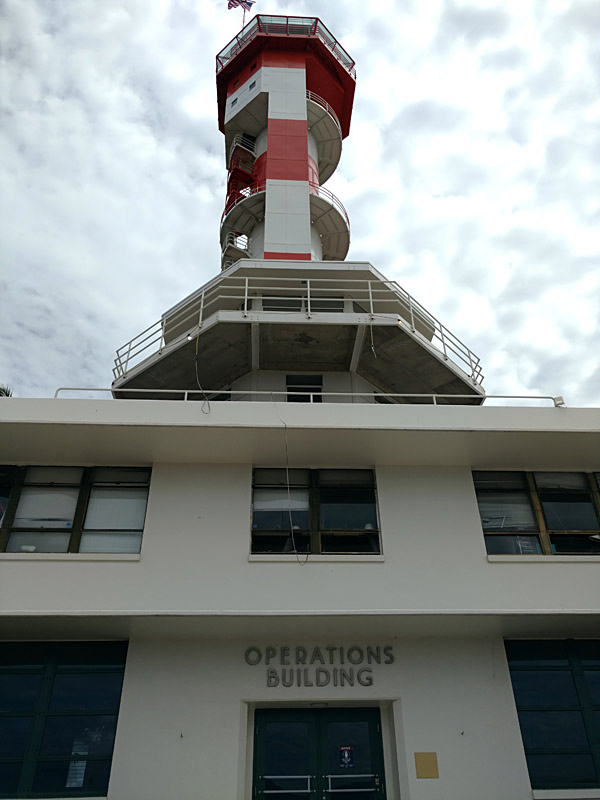 Another view of the tower.
|
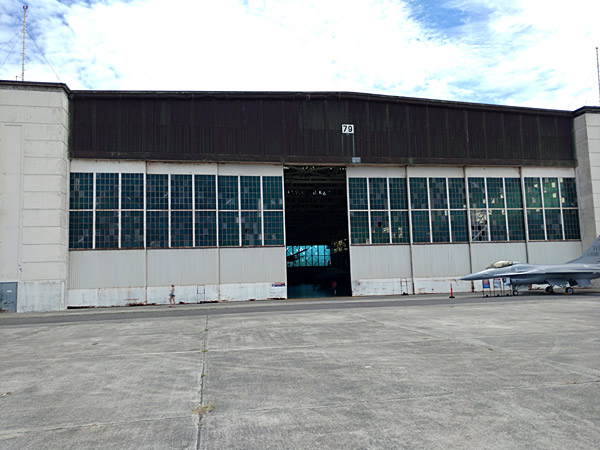 This is hangar 79. It is an 80,000 square foot hangar that contains many of the museum's aircraft.
In 1941 it was a maintenance and engine repair facility.
|
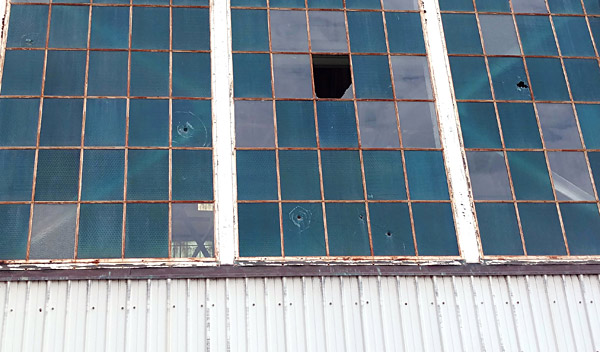 Bullet holes from the Japanese attack are still visible in the glass of the hangar doors.
This hangar didn't receive a lot of damage during the attack.
|
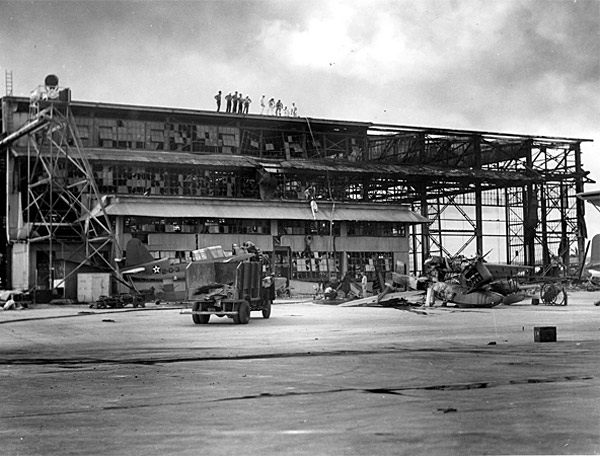 This hangar wasn't as fortunate as hangar 79!
|
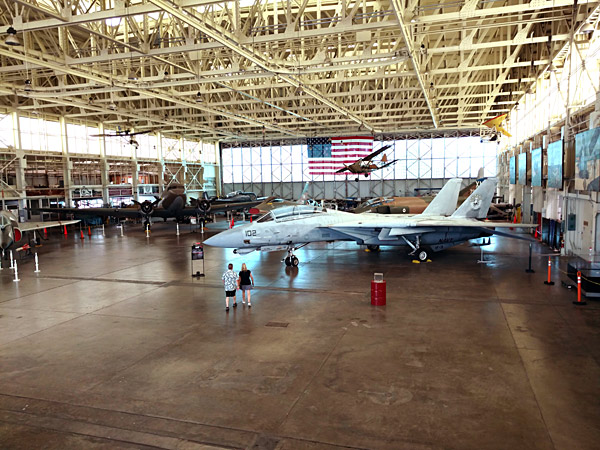 Here is a look inside of hangar 79.
|
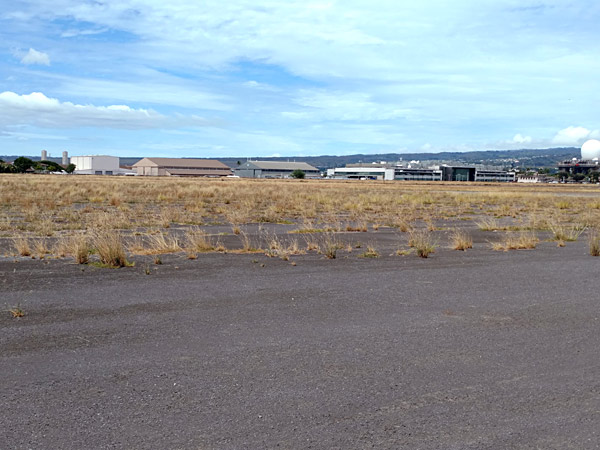 This is what runway 4-22 looks like today. Grass has completely covered the old runway surface.
Next stop the USS Missouri (BB-63)!
|
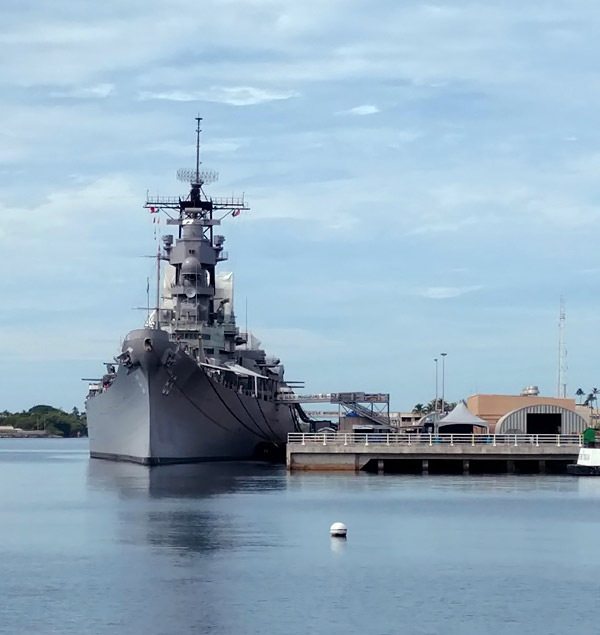 This is the USS Missouri (BB-63).
It is an Iowa class battleship and was launched January 29, 1944. It is 877' 3" long, and has a beam of 108' 2", and displaces 57,500 long tons.
She was decommissioned March 31, 1992.
|
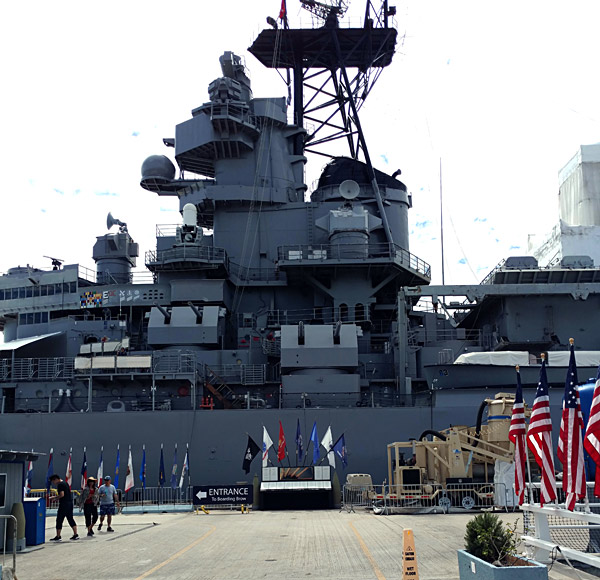 On January 29, 1999 the USS Missouri (BB-63) was opened up as a museum sitting just 500 yards from where WWII began in 1941 at the USS Arizona (BB-39).
You can take guided tours through the ship or do self guided tours.
|
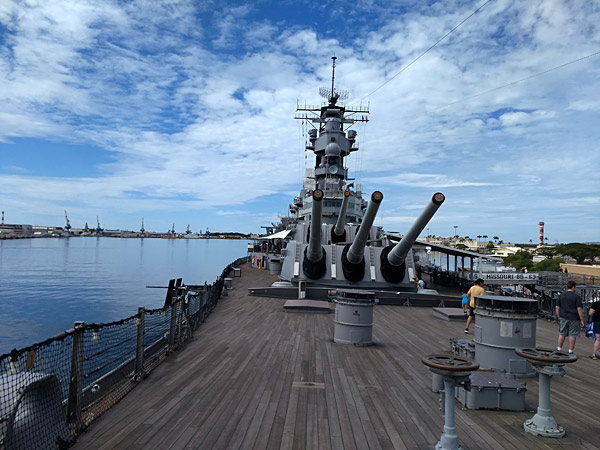 The teak decks are impressive!
|
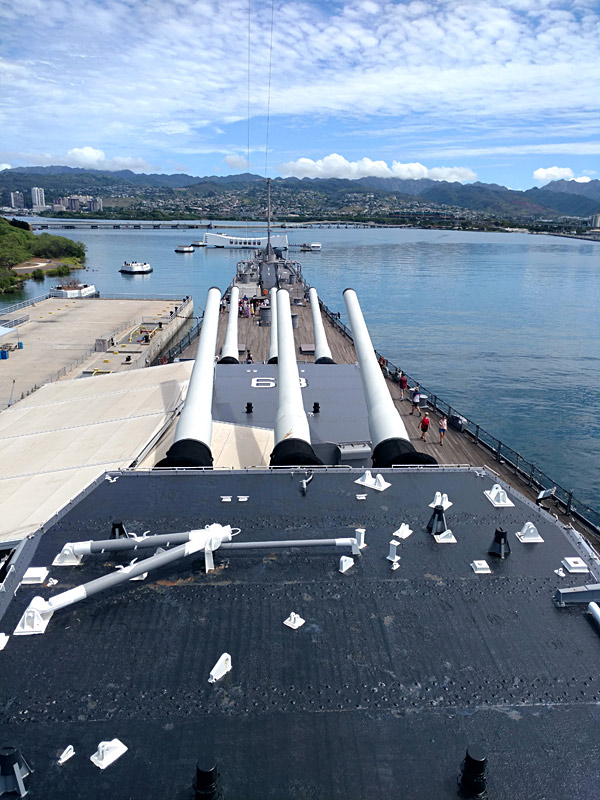 The USS Arizona (BB-39,) where WWII started, sits in front of the USS Missouri (BB-63,) where WWII ended.
|
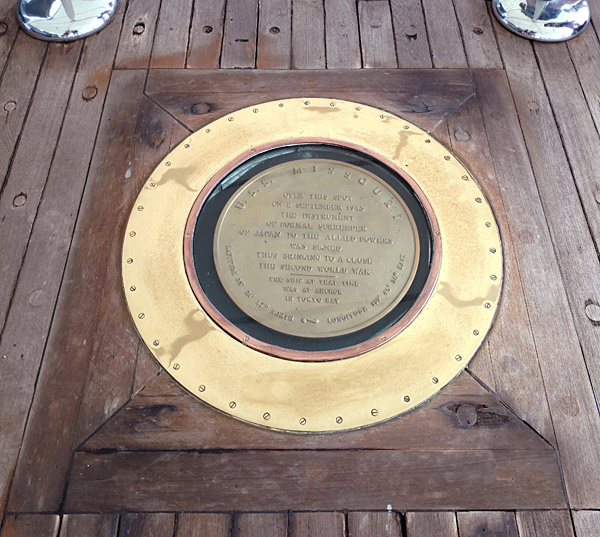 This plaque is placed on the starboard side of the Missouri where the surrender of Japan was signed.
The official surrender by Japan took place aboard the USS MISSOURI on September 2, 1945, with Shigemitsu Mamoru, representative of the Japanese emperor, signing surrender documents in the presence of Admiral Chester Nimitz, representing the United States Navy, and General Douglas MacArthur, acting as the supreme commander of Allied forces for the proceeding.
The plaque reads: "Over this spot on 2 September 1945 the instrument of formal surrender of Japan to the allied powers was signed thus bringing to a close the second world war. The ship at that time was at anchor in Tokyo Bay".
|