Ford Trimotor

Recently I was at a local airport and saw a Ford Trimotor operated by the EAA giving rides to the public and since I didn’t know very much about these aircraft I thought it might be nice to learn a little more so here is what I found.

Ford Trimotor
Ford Trimotor taking off
Ford Trimotor Interior
Ford Trimotor Airborne
The Ford Trimotor, nicknamed “The Tin Goose”, was an American three-engined transport plane that was produced by Henry Ford from 1925 to June 7, 1933. The first model (3-AT) was rather heavy and unsuccessful but several more successful “AT” (Air Transport) variants were produced, including the 4-AT (79 sold) and the 5-AT (115 sold) variant which served over 100 different airlines all over the world.
An all metal aircraft was not a revolutionary idea but the Ford Trimotor, designed by William Bushnell Stout, was certainly more advanced than the standard constructed aircraft in the 1920s and was touted as “the safest airliner around”. Its fuselage and wings were constructed of aluminum alloy which was corrugated for added strength (a Trimotor distinquishing feature), but the compromise was that it created drag which reduced its overall performance. The aircraft was designed primarily for passenger use but could be easily adapted for hauling cargo by removing the seats in the fuselage. The 5-AT also had a unique feature of “drop down” cargo bays in the wing root section to increase cargo capacity.
Like Ford cars and tractors, the Trimotors were well-designed, relatively inexpensive, rugged and reliable (for the era) and, interestingly enough, Ford was the first company to use an assembly line for aircraft production by 1927 but of the more than 199 models produced only 18 exist today.
Specifications
• Crew: 3 (1 Flight attendant)
• Capacity: ten passengers

• Cost: $42,000 in 1933

• Length: 50 ft 3 in (15.32 m)
• Wingspan: 77 ft 10 in (23.72 m)
• Height: 12 ft 8 in (3.86 m)
• Wing area: 835 ft² (77.6 m²)
• Empty weight: 7,840 lb (3,560 kg)
• Loaded weight: 10,130 lb (4,590 kg)
• Max. takeoff weight: 13,500 lb (6,120 kg

• Fuel capacity: normally 230 US gallons (886 liters)
• Fuel consumption: about 45 gallons per hour (173 litres per hour))

• Powerplant: 3 × Pratt & Whitney Wasp C 9-cylinder radial engines, 420 hp (313 kW) each

Performance

• Maximum speed: 150 mph (241 km/h, 130 kts)
• Cruise speed: 90 mph (145 km/h, 78 kts)
• Stall speed: 64 mph (103 km/h, 56 kts)
• Range: 550 mi (885 km, 478 nm)
• Service ceiling: 18,500 ft (5,640 m)
• Rate of climb: ft/min (m/s)
• Wing loading: 16.17 lb/ft² (78.87 kg/m²)
• Power/mass: 10.71 lb/hp (6.52 kg/kW)

Your Own Personal Jet Fighter

SF-1 Archon
Did you ever want to have your own jet fighter but never thought you could afford to? Take a look at the SF-1 Archon from Aero Sports. It is an all aluminum constructed aircraft with an empty weight of approximately 452 pounds! For more information go to the Aero Sports site…

Click here to visit Aero Sports…

Early Fight Decks

We have all seen pictures and videos of modern aircraft carriers and the huge flight decks that enable jet aircraft to be launched and recovered but haven’t you ever wondered what the first aircraft carriers and their flight decks were like?
Eugene Ely was the first person to take off from a warship and it wasn’t even an aircraft carrier. He was launched from the front end of a cruiser (USS Birmingham) on November 14,1910.
Eugene Ely
USS Birmingham (CL-2)
So much for taking off in his underpowered aircraft, but what about landing?
This didn’t occur until two months later on January 18, 1911 when Eugene Ely landed his Curtiss pusher aboard the amored cruiser USS Pennsylvania (ACR-4). This was the first successful aircraft landing on a ship, and the first using a tailhook system designed by Hugh Robinson, the chief engineer for Curtiss Aviation.
In both cases the flight decks were simple wood ramp structures built over the cruiser’s ship decks using only partial (but not the full length) of the ship. The ships were not under way at sea either which would be the next step in the evolution of the aircraft carrier and naval aviation operations.This would not happen for more than a year later.
USS Pennsylvania (ACR-4)
May 4, 1912 Commander Charles Samson became the first man to take off from a ship which was underway when he flew his Short S-27 from the deck of the battleship HMS Hibernia which was steaming ahead at 10.5 knots. Now all that was left to do was to land while underway, which would not happen for several more years.
HMS Hibernia with takeoff ramp.

Because the take-off speed of early aircraft was so low, it was possible for an aircraft to make a very short take off when the launching ship was steaming into the wind. The Hibernia still wasn’t a true aircraft carrier and it did not have the capability to recover any aircraft after they departed.

Short S-27 departing the HMS Hibernia 1912.
On August 2, 1917 Commander Edwin H. Dunning of the British Royal Naval Air Service was the first pilot to land an aircraft (a Sopwith Pup) on a moving ship the HMS Furious. Unfortunately five days later as he attempted to land his aircraft he went over the side, where he was knocked unconcious in the cockpit and drowned, thus Dunning also has the dubious distinction of being the first person to die in an aircraft carrier landing accident.
E.H. Dunning landing a Sopwith Pup HMS Furious

The HMS Furious was a modified cruiser and note that the flight deck still isn’t the full length of the ship.

HMS Argus The first aircraft carrier that began to show the configuration of the modern vessel was the converted liner HMS Argus which was launched in 1917. It had a large flat wooden deck added over the entire length of the hull, giving a combined landing and take-off deck unobstructed by a superstructure.
The ship’s flight deck was 549 feet long with a ship’s beam of 68 feet. The Argus also had 330 feet (100.6 m) long, 48–68 feet (14.6–20.7 m) wide, and 16 feet (4.9 m) high hangar deck with two aircraft lifts.
The lack of a superstructure command position and funnel were considered unsatisfactory, and the Argus was used to experiment with various ideas to remedy the solution. It was found that some early aircraft naturally yawed to port (left) on take-off; therefore, superstructures were placed on the starboard (right) side of ships to avoid the potential risk of colliding with the structure and so this became the typical aircraft carrier arrangement and was used in future carrier designs.
USS Langley It is interesting to note that the first U.S. Carrier, USS Langley, launched in 1920 also had a flat deck with no superstructure.
The Langley was similar in size to the Argus, with a length of 542 ft (165 m) and a beam of 65 ft 5 in. (19.94 m).
The Langley only had one aircraft lift and one catapult but it was the Navy’s official entry into the era of the aircraft carrier.
In both ships, the hangar deck was the strength deck and flight decks were wood, usually considered part of the superstructure.
The HMS Hermes was the world’s first ship to be designed and built as an aircraft carrier. She was launched September 11, 1919. Prior to this time all aircraft carriers were conversions of existing ships. Carrier evolution was well underway by the mid-1920′s with armored and angled decks still to come.
HMS Hermes

What is it?

If you guessed the Ball-Bartoe JW-1 Jetwing, then you would be correct! I recently visited the “Wings Over the Rockies Air & Space Musuem” where this aircraft was on display.
It was a US research aircraft designed by Otto E. “Pete” Bartoe in the 1970s to investigate “blown wing” technology. Bartoe reasoned that if jet engine air could be ducted and blown over the wing, the increased airflow would increase lift which would allow for smaller wings enabling higher speeds. A “blown wing” could also fly slow enough (thanks to increased lift) to operate from unimproved runways and aircraft carriers.
The aircraft is a small mid-wing design powered by a Pratt & Whitney turbofan and fitted with a conventional landing gear. Engine air is exhausted just outside the fuselage through slots in the top skins of both wings and directed aft by vanes in a duct through slots on the leading edges. (About 70% of the wingspan was bathed from the engine’s fan stage discharge air.) Mounted above the main wing was an small “augmentor” wing; exhaust gases passed through the slot between the two wings which caused the lower pressure in the slot to draw in more air which increased lift. At the trailing edge, large flaps rotated and extended up to 52 degrees. They remained in contact with the top skin and made use of the Coanda effect, in which airflow bends to follow a curved surface. With the flaps down, the “bend” in the airstream provided downward thrust and enabled the Jetwing to fly as slow as 40 mph (64 km/h).
The Jetwing first flew in 1977, at Mojave, California, with Lockheed test pilot Harold “Fish” Salmon at the controls. The blown-wing configuration generated more than twice the lift of a conventional wing of the same area. The Jetwing flew slowly enough that Bartoe could use his Super Cub as a chase plane.

Specifications Bell Bartoe JW-1 Jetwing
• Crew: 1
• Length: 29 ft 0 in (8.84 m)
• Wingspan: 21 ft 9 in (6.63 m)
• Wing area: 105 ft2 (9.8 m2)
• Empty weight: 2,500 lb (1,134 kg)
• Gross weight: 3,336 lb (1,513 kg)
• Powerplant: 1 × Pratt & Whitney JT15D-1 turbofan, 2,200 lbf (9.8 kN)
• Fuel Capacity: 106-gallons, 41 minutes endurance
Performance
• Maximum speed: 400 (347 Kt) mph (644 km/h)
• Minimum speed: 40 mph (64 km/h).
• Range: 120 nmi (220 km) miles ( km)

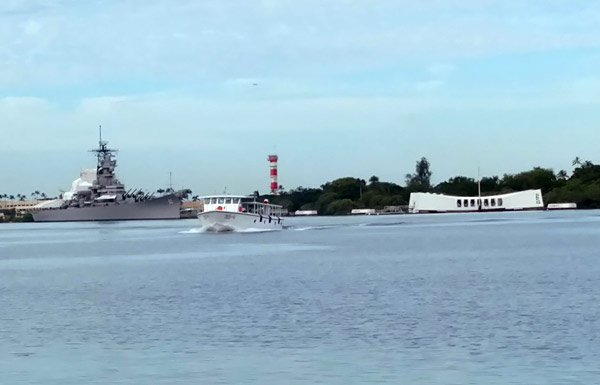
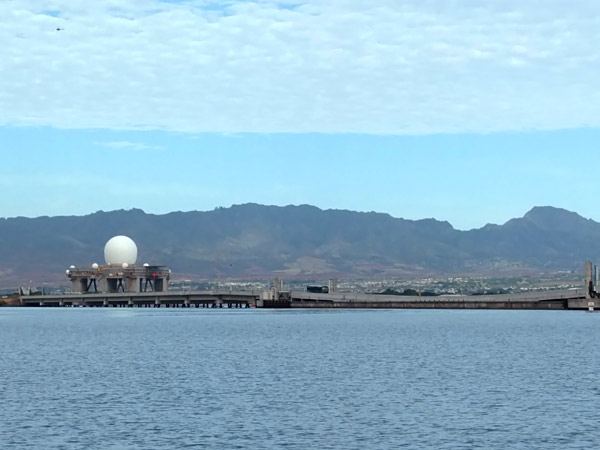
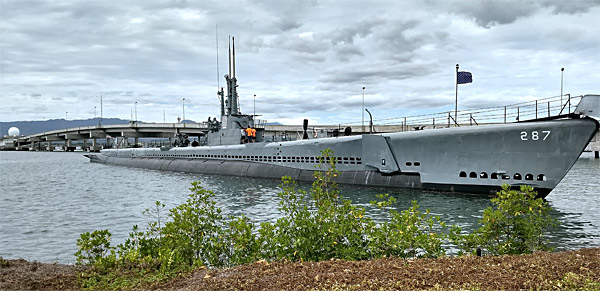
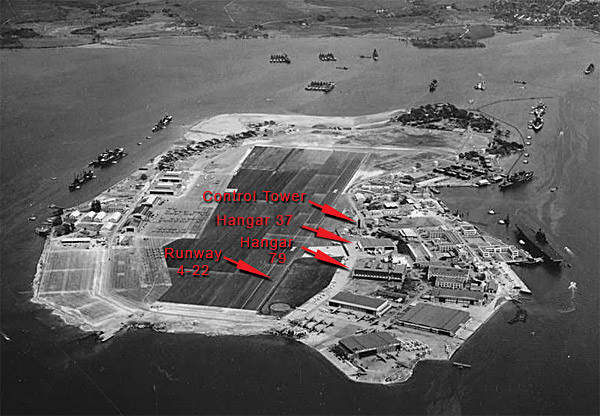
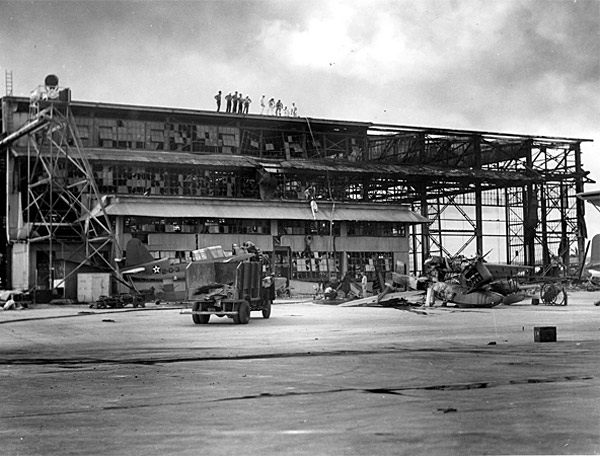
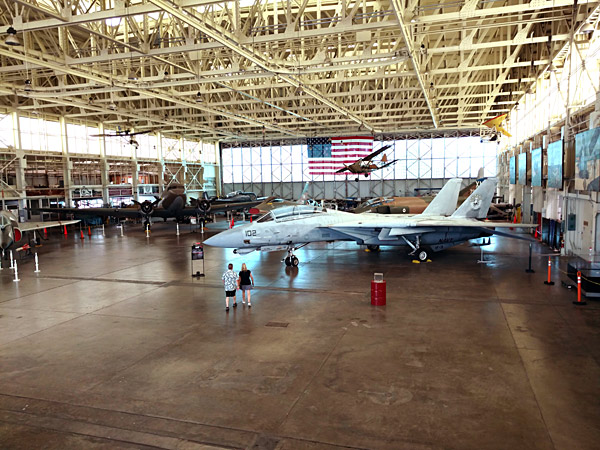
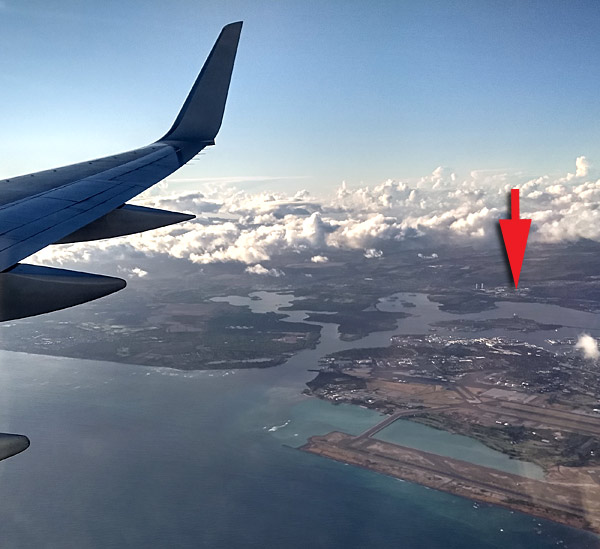
70th Anniversary, Pearl Harbor December 7, 1941

“…a date which will live in infamy – the United States of America was suddenly and deliberately attacked by naval and air forces of the Empire of Japan…” – Franklin D. Roosevelt.
Today is the 70th anniversary of the attack at Pearl Harbor, Hawaii and we should all remember the great sacrifices that the men and women of the armed services have incurred for our freedom!

Toys, Toys, Toys!


Can you imagine getting a pedal airplane for Christmas?! We were recently at the “Wings Over the Rockies Air Museum” in Denver and if you ever get the chance make sure you stop in and visit them. These pedal toys are just some of the airplanes they have on display.

“Lucky Penny”


I recently learned that there is a tradition of placing a penny in the drain cover of Pratt & Whitney radial engines, a practice started back in the 1930′s. As traditions and myths go nobody really knows why or exactly when the practice started but it is still done to this day.

Interestingly enough, the drain cover is the perfect size for a penny to fit into, but that is just by coincidence and not by design. Why would anyone place a penny there at all? Perhaps simply to date the time of overhaul or just for good luck but at any rate some of the drain covers are hard to see, especially in the R-985′s (you have to look under the bottom front of the engine).
I decided to see for myself if this tradition is really true so yesterday when I was at the airport I saw a fellow working on his Ag Cat and I decided to take a look to see if there was a penny in his drain cover. His engine didn’t have one but he pointed to a freshly overhauled engine in the back of the hangar which did. Just to make sure that indeed a penny would fit in the cover I placed one there and sure enough it fit! It was a tight fit, and not easy to remove, but I can say that the myth is “confirmed”. I wonder how many other engines out there have pennies on them?……

Tiedown Knots To Secure Your Airplane

Did you ever arrive at your destination airport and discover that you really don’t know how to properly tie down the airplane? If so, take a look at these easy to tie knots and with a little practice you will be ready the next time you tie your airplane down.
There are different kinds of knots one can tie, but I have chosen to illustrate the two most commonly used, the bowline and the double locking half hitch.
Obviously the type of lines available at different tiedown spots are varied but chains offer the best security followed by nylon rope with at least 3000-pound breaking strength (1/2″ diameter) for singles and 4000-pound breaking strength for light twins.
Double Locking Half Hitch
It is important to never tie the lines directly to the struts but instead use the tie down rings provided. Ropes can easily slip to a point where even slight side pressures can damage them. Allow for about an inch of movement “play” when the lines are tightened but be careful not to overtighten as this could exert inverted flight stresses on the aircraft.
The tiedown lines should also be angled forward from the wings to the anchor spot and aft from the tail to the anchor spot. This will give the best protection and security to hold down the aircraft.
Double Locking Half Hitch- The animation at the left shows the first set of half hitches being tied, a second set (identical to the first) should be tied about six inches to one foot below the first to complete the knot.
• Run the line through the tiedown ring from the back of the airplane to the front.
• Circle the line under, then over, the aft line, then through and behind the loop (front line) for the first half hitch.
• Repeat and circle the line again under the aft line, then over and in front of the just created half hitch, then through and behind the front line loop.
• Pull down to lock the first set of half hitches and then tie a second set 6-12″ lower to complete the tiedown knot.
Bowline
Bowline- The animation at the left shows the bowline knot, it should be tied about six to twelve inches below the tiedown ring.
• Run the line through the tiedown ring from the back of the airplane to the front.
• Create a loop on the aft line by twisting a section of rope backwards towards you so that the loop faces the front of the airplane and the aft line (running down to the ground) is behind the line (running up to the tiedown ring).
• Thread the line through and over the loop just created, then under the aft line, circle it back around and over the aft line.
• Finish the knot by threading the line back through the loop and pull it tight.
Don’t forget to set the brakes and install the gust locks if you intend to leave the aircraft for the night or extended period of time. Hopefully these knots will serve you well and if you would like more information about securing your aircraft take a look at the Federal Aviation Administration’s circular AC20-35C “Tiedown Sense”.
Click here to get the FAA Tiedown Sense advisory circular AC20-35C.

WWII Ends 66 Years Ago- August 15, 1945

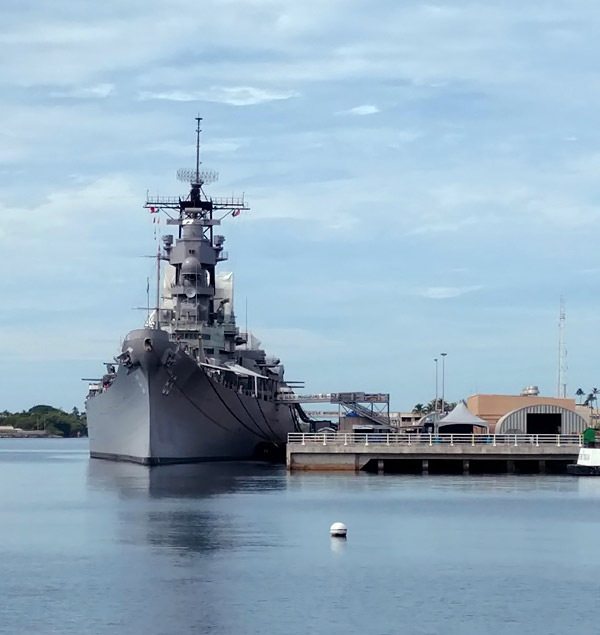
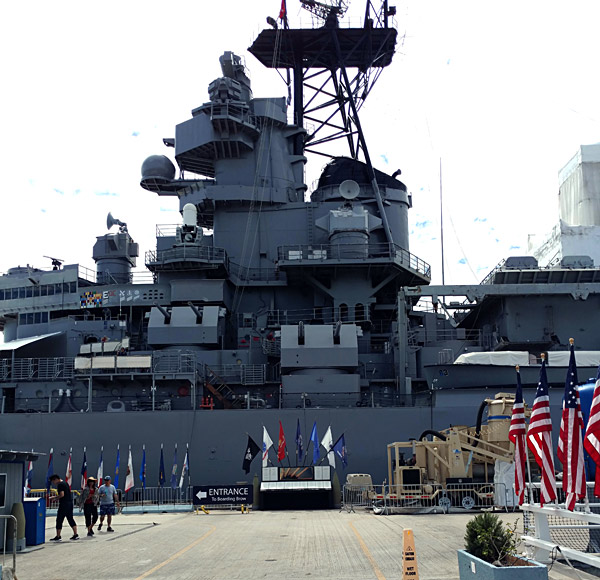
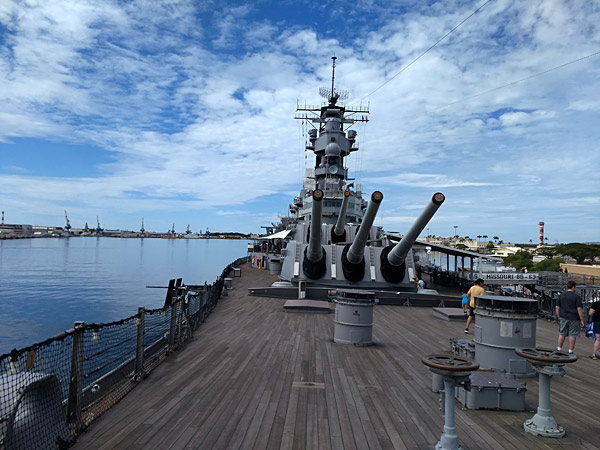
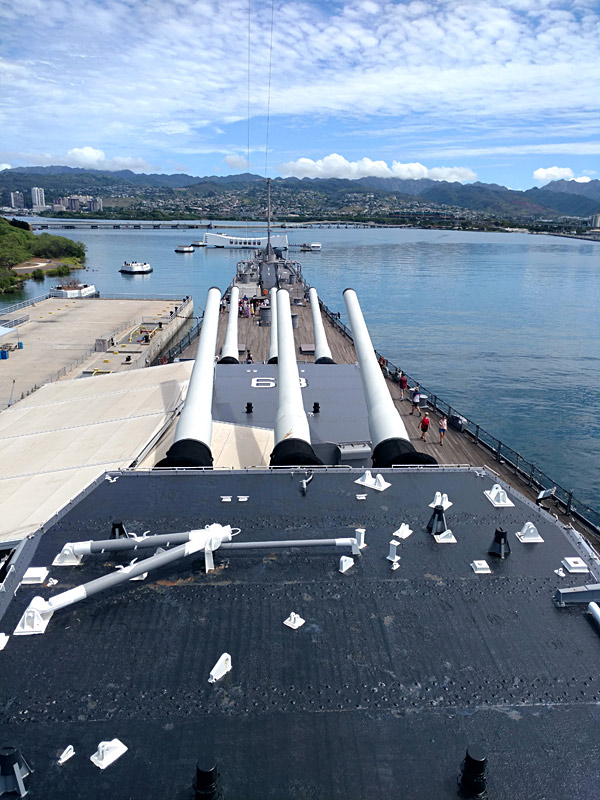
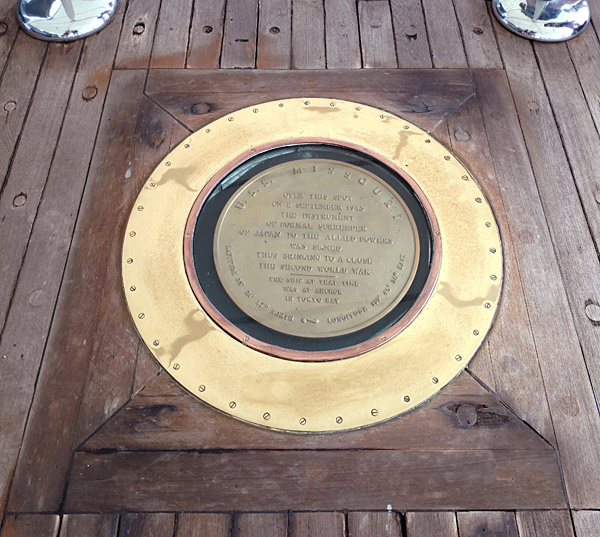
66 years ago today (August 15) Japanese Emperor Hirohito gave a recorded radio address to the nation of Japan, called the Gyokuon-hōsō (“Jewel Voice Broadcast”), announcing the surrender of Japan. Later on September 2nd, 1945, the formal surrender ceremony was held aboard the USS Missouri (BB-63) in Tokyo Bay which included a huge flyover of U.S. Naval and Army aircraft said to have numbered at around 1900 aircraft.
Here the Japanese delicates await aboard the Missouri for ceremony to begin; General Douglas MacAurthor conducts the proceedings on behalf of the United States.
A plaque placed on the deck of the USS Missouri commerates the spot where the declaration was signed on September 2, 1945.

Balloons in the Civil War?

When I think about manned- hot air balloons images of the October “Albuquerque International Balloon Fiesta” which started in 1972 comes to mind, but did you know that ballooning has been around for a long time?
Although the first recorded manned flight was made in a hot air balloon built by the Montgolfier brothers on November 21, 1783, I was amazed when I found out that balloons were used in the U.S. Civil War! In fact, July 16, 2011 is the 150th anniversary of manned reconnaissance balloon flights of the U.S. Civil War.
Professor T. S. C. Lowe became the father of aerial reconnaisance and successfully demonstrated the usefulness of the balloon for military purposes to Abraham Lincoln in July of 1861. Lowe met with President Abraham Lincoln on July 11, 1861, and proposed a demonstration with his own balloon, the Enterprise, from the lawn of the armory directly across the street from the White House. From a height of 500 feet (150 m) he telegraphed a message to the President describing his view of the Washington, D.C., countryside. Eventually he was chosen over other candidates to be chief aeronaut of the newly formed Union Army Balloon Corps.
Lowe (pictured on the left) is said to have been accompanied by President Lincoln the next day on a flight but this is unconfirmed.
The Union Army Balloon Corps served the Army from October 1861 until the summer of 1863.
A first in the history of warfare occured on September 24, 1861, Lowe ascended to more than 1,000 feet (305 meters) near Arlington, Virginia, across the Potomac River from Washington, DC, and began telegraphing intelligence on the Confederate troops located at Falls Church, Virginia, more than three miles (4.8 kilometers) away. Union guns were aimed and fired accurately at the Confederate troops without actually being able to see them.
Seven balloons in all were made for the Balloon Corps, they were: Intrepid, Constitution, United States, Washington, Eagle, Excelsior, and the original Union. The balloons ranged in size from 32,000 cubic feet (906 cubic meters) down to 15,000 cubic feet (425 cubic meters). Each had enough cable to climb 5,000 feet (1524 meters).
The balloons were constructed in Philadelphia using India silk and cotton cording. The envelopes were then varnished so that they would be leakproof and would stay inflated for up to 2 weeks.
At first the balloons of the day were inflated at municipal coke gas supply stations and were towed inflated by ground crews to the field. (Coke gas is derived from burning soft coal and contains hydrogen, methane, and carbon monoxide.) Lowe recognized the need for the development of portable hydrogen gas generators, by which the balloons could be filled in remote areas.
Hydrogen gas generators designed by Lowe, were built at the Washington Navy Yard by master joiners who fashioned them using copper plumbing and tanks which, when filled with sulfuric acid and iron filings, would yield hydrogen gas. They were designed to be loaded into box crates that could easily fit on a standard buckboard. (Usually each balloon was accompanied by two gas generators.)
It should not come to anyone’s surprise that the Confederate Army noticed the success of balloon reconnaisance and had three balloons of their own as well. Lacking the gas generators of the Union Army their first balloons were made of the Montgolfier rigid style: cotton stretched over wood framing and filled with hot smoke from fires made of oil-soaked pine cones. They were piloted by Captain John R. Bryan beginning in 1862. Two additional balloons called “Silk Dress Balloons” were constructed of silk dress fabric in 1862 but by 1863 both had been captured by Union troops.
For all its success, the Balloon Corps was never fully appreciated by the military community. They were still regarded as “break-necked carnival showmen” and none of the aeronauts had military commissions. The only ones who found any value in them were the generals whose jobs and reputations were on the line. Finally by August 1, 1863 the Balloon Corps was no longer in use.